
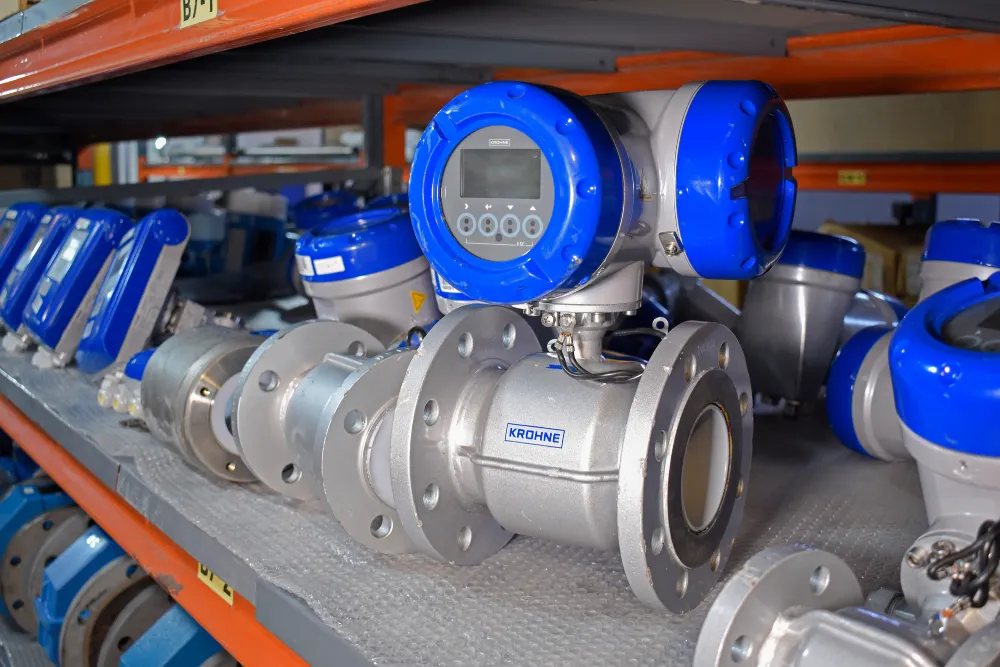
In industrial projects, instrumentation is not merely measuring equipment but an integral part of the process decision-making system. The data generated by instruments serve as the basis for controlling, regulating, and responding in control systems such as PLCs and DCS. Any error or inaccuracy in these devices can lead to process disruptions or unsafe conditions.
Petro Tejarat Sahel Kish provides instrumentation on a project-oriented basis, tailored to the actual needs of process units. In this approach, instrument selection is based not on product variety but on operational conditions, safety requirements, and industrial standards.
The Role of Instrumentation in Oil, Gas, and Petrochemical Industries
In process industries, instrumentation continuously monitors key parameters such as pressure, temperature, flow, and fluid level. This information is transmitted to control systems to enable automated or manual decision-making regarding equipment performance.
In oil and gas pipelines, instrumentation acts as a warning and control mechanism, preventing undesired fluctuations, excessive pressure, or critical conditions. For this reason, instruments are always installed at sensitive points in the process.
General Classification of Instrumentation Equipment
Instrumentation used in oil, gas, and petrochemical industries is generally categorized into several main groups, each playing a specific role in process control:
- Pressure measurement devices
- Temperature measurement devices
- Flow measurement devices
- Level measurement devices
- Signal transmission and conversion devices
Importance of Accuracy and Reliability in Instrumentation
Measurement accuracy in instrumentation is a key factor in process stability. Even small deviations in measurement data can result in incorrect control valve adjustments, increased energy consumption, or reduced product quality.
Therefore, industrial instrumentation must be evaluated for build quality, performance stability, and compatibility with environmental conditions. Factors such as ambient temperature, humidity, vibration, and fluid type all affect the performance of these devices.
Instrumentation and Process Safety
In oil and gas industries, instrumentation plays a direct role in process safety systems. Data from these devices form the basis for activating alarms, emergency shutdowns, and control actions.
Improper functioning of instrumentation can delay the detection of critical conditions. Hence, selecting and installing these devices must comply with safety requirements and industrial standards.
Key Considerations in Instrument Selection
Selecting instrumentation without a thorough understanding of the process is a common mistake in industrial projects. Factors such as fluid type, measurement range, operating pressure and temperature, required accuracy, and signal output type must all be evaluated prior to selection.
Furthermore, ensuring compatibility of instrumentation with existing control systems plays a crucial role in the proper functioning of the entire system. This is particularly important in EPC projects and advanced units.
Petro Tejarat Sahel Kish Approach to Instrumentation Supply
The approach of Petro Tejarat Sahel Kish to supplying instrumentation is based on analyzing operational conditions, project engineering documents, and control requirements. Instrumentation is considered an integral part of the process system, not a standalone product.
This project-oriented perspective helps EPC contractors and clients select suitable instruments with confidence in accuracy, stability, and technical compliance, minimizing operational risks.
The instrumentation supplied in this category meets the needs of oil, gas, and petrochemical process units, enabling safe and stable design and operation of industrial systems.