
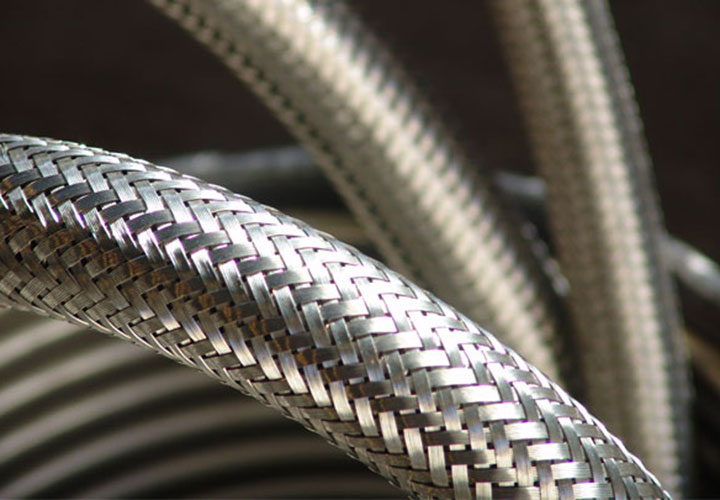
Industrial Hoses are essential complementary components in industrial piping systems, used for fluid transfer, vibration absorption, misalignment compensation, and creating flexible connections between equipment and pipelines. These hoses are specifically designed for the operating conditions of the oil, gas, and petrochemical industries.
In many industrial facilities, rigid piping throughout the system is either impractical or suboptimal. In such cases, industrial hoses provide a flexible solution, enabling safe connection of equipment, pumps, and auxiliary lines.
Unlike general-purpose or utility hoses, industrial hoses must withstand working pressure, fluid temperature, and specific environmental conditions. Therefore, their selection is always based on the technical specifications of the project.
Applications in Oil, Gas, and Petrochemical Industries
Industrial hoses are used in parts of the piping system that require flexibility or stress absorption, including:
- Connecting pumps and rotating equipment
- Absorbing vibration in transmission lines
- Temporary or semi-permanent fluid transfer lines
- Connecting auxiliary equipment in industrial units
- Compensating for thermal or mechanical displacements
Technical Features of Industrial Hoses
Industrial hoses are typically made of multiple layers, including a fluid-resistant inner layer, a reinforcement layer, and an outer cover. This multilayer structure increases mechanical strength, pressure resistance, and hose durability in industrial conditions.
Depending on the application, hoses can be designed for oil, gas, chemical, or auxiliary fluids. The selection of hose type must match the fluid type and operating conditions.
Key Considerations in Hose Selection
Incorrect selection of an industrial hose can lead to leaks, bursts, or reduced system safety. Therefore, parameters such as working pressure, fluid temperature, fluid type, bending radius, and environmental conditions must be carefully reviewed before selection.
Additionally, the type of hose connection to the system, including end fittings and installation method, plays an important role in performance and safety.
Advantages of Using Standard Industrial Hoses
- Provides flexible connections in piping systems
- Absorbs vibration and reduces mechanical stress
- Suitable for temporary and auxiliary lines
- Increases safety of connected equipment
- Easy installation in specific industrial conditions
Project-Oriented Supply by Petro Tejarat Sahel Kish
The approach of Petro Tejarat Sahel Kish in supplying industrial hoses is based on a detailed assessment of operating conditions and the hose location within the piping system. These hoses are recommended only in applications where their use is technically and safely justified.
This project-oriented approach helps EPC contractors and technical teams select industrial hoses as part of an engineered and safe system design.