
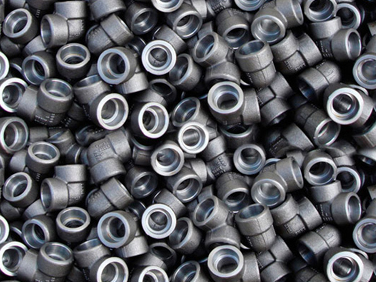
Flange is one of the fundamental components in industrial piping systems, used to connect pipes to each other, to equipment, or to valves. This connection, using bolts and gaskets, creates a mechanical joint that can be assembled and disassembled, which is vital in oil, gas, and petrochemical pipelines.
In industrial projects, a flange is not merely a connection piece but part of the engineering design of the piping system. The selection of flange type, material, and connection method directly affects the safety, sealing, and maintainability of the pipeline.
Flanges are manufactured in various types according to application, operating pressure, fluid temperature, and working conditions. Among the common types, Weld Neck, Threaded, and Cast Iron flanges are most frequently used in oil, gas, and petrochemical industries.
Applications of Flanges in Oil, Gas, and Petrochemical Lines
Flanges play a key role in the design and implementation of industrial piping systems and are used in situations that require safe yet detachable connections, including:
- Connecting pipes to industrial valves
- Connecting pipelines to process equipment
- Creating access points for maintenance and repair
- Piping systems in refinery and petrochemical units
- Oil and gas transmission lines with high safety requirements
Types of Industrial Flanges
Weld Neck Flange
Weld Neck Flange is one of the most common flange types in oil and gas industries, welded directly to the pipe. Due to its permanent connection and high strength, it is ideal for high-pressure lines and harsh operating conditions.
Weld Neck flanges are generally used in main transmission lines and systems where connection safety and durability are critical. The quality of welding and flange alignment with pipe specifications is decisive in performance.
Threaded Flange
Threaded Flange connects to the pipe via threading, without welding. It is generally used in low- to medium-pressure systems or where welding is not feasible.
Threaded flanges are mostly applied in branch lines, auxiliary installations, and systems where ease of installation and disassembly is important. However, their use in high-pressure systems requires careful technical review.
Cast Iron Flange
Cast Iron Flange is usually applied in low-pressure and non-critical lines. Due to the properties of cast iron, it is more suitable for mild and non-corrosive operating conditions.
Compared to steel flanges, cast iron flanges have lower mechanical strength, limiting their use in main oil and gas lines. Selection should consider pressure, temperature, and fluid type.
Technical Specifications and Selection Requirements
Flanges provided by Petro Tejarat Sahel Kish are selected based on project technical specifications and operational conditions. Factors such as operating pressure, fluid temperature and type, pressure class, and design standard all affect flange selection.
Coordination between flange, gasket, and bolts is essential for achieving a safe, leak-free connection. Incorrect selection of any of these components can compromise overall performance.
Benefits of Using Standard Industrial Flanges
- Easy assembly and disassembly of equipment
- Safe and leak-proof connection
- Suitable for periodic maintenance
- Wide application in industrial piping systems
- Compatibility with operational conditions in oil and gas industries
Project-Oriented Flange Supply by Petro Tejarat Sahel Kish
The approach of Petro Tejarat Sahel Kish in supplying industrial flanges is based on careful project requirement analysis and full compliance with piping technical specifications. The selection of flange type, material, pressure class, and connection method is done to enhance system safety and stability.
This project-oriented approach helps clients and EPC contractors confidently choose the appropriate flange with assured technical compliance and performance.