
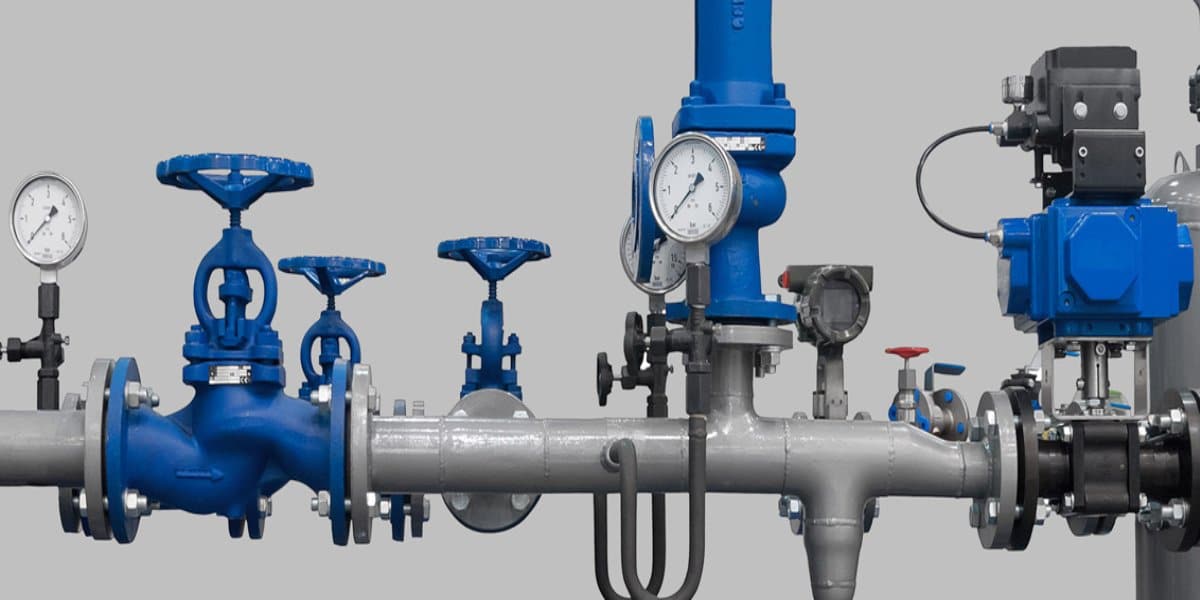
Control Valves are among the most advanced equipment used in piping and process systems. Their primary function is the continuous and precise control of process parameters such as flow, pressure, temperature, or fluid level. Unlike on/off valves, control valves operate continuously within the control loop.
In oil, gas, and petrochemical industries, unstable flow can lead to reduced process quality, equipment damage, or unsafe conditions. Therefore, control valves are designed and selected as an integral part of the Process Control System (PCS).
Control valves usually work directly with measurement instruments and control systems such as PLCs or DCSs, serving as the interface between control commands and physical changes in fluid flow.
Role of Control Valves in Oil, Gas, and Petrochemical Industries
In process units, control valves directly affect system stability, safety, and efficiency. They are installed at critical points to enable precise adjustment of operating conditions.
In oil and gas pipelines, proper pressure and flow control by control valves prevents unwanted fluctuations, cavitation, or downstream equipment damage.
Common Applications of Control Valves
- Flow control in process units
- Pressure regulation in oil and gas transmission lines
- Temperature control in thermal circuits
- Fluid level control in tanks and process equipment
- Industrial automation and refinery units
Technical Features of Control Valves
Control valves are more complex in design than on/off valves, with components engineered for gradual and precise position adjustments. They are typically equipped with pneumatic, electric, or hydraulic actuators.
The selection of body, internal material, trim type, and performance characteristics directly impacts control accuracy and equipment lifespan. Hence, valve specifications must fully align with process conditions.
Important Considerations in Selecting Control Valves
Selecting control valves without a thorough process review is a common mistake in industrial projects. Parameters such as fluid type, inlet and outlet pressures, flow range, and control requirements must be carefully evaluated.
Mismatch between the control valve and process conditions can result in system instability, reduced control precision, or damage to the valve and auxiliary equipment.
Benefits of Using Proper Control Valves
- Precise and stable control of process parameters
- Enhanced safety of industrial units
- Improved process efficiency and quality
- Reduced wear on downstream equipment
- Integration with industrial control systems
Project-Oriented Supply of Control Valves by Petro Tejarat Sahel Kish
The approach of Petro Tejarat Sahel Kish in supplying control valves is based on a deep understanding of the process and project control requirements. The selection of valve type, actuator, and performance specifications is aimed at achieving stable and safe control.
This project-oriented approach helps EPC contractors and clients select control valves not merely as equipment, but as an integral part of the system’s control solution.