
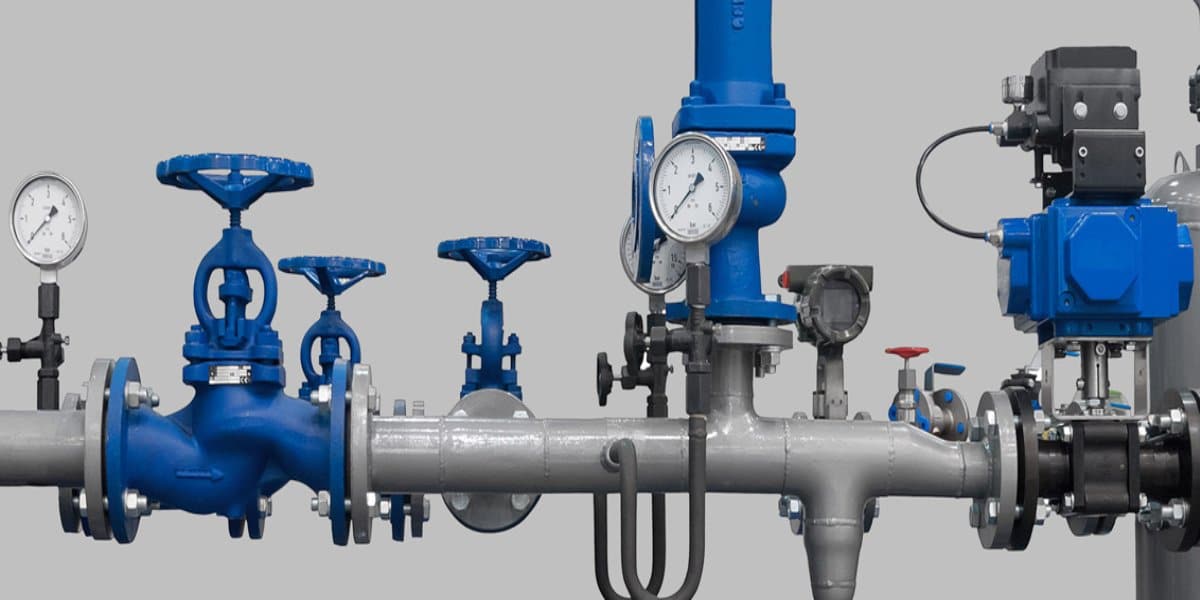
Cast Iron Valves are part of industrial valves primarily used in piping systems with low to medium pressure and temperature. Due to the material properties of cast iron, these valves are a common choice for lines that do not require handling very high pressures.
In the oil, gas, and petrochemical industries, cast iron valves are typically applied in non-corrosive fluid pipelines, auxiliary networks, utility units, and low-risk systems. Using these valves in main transmission lines or harsh operational conditions requires careful technical assessment and defined limitations.
Their simple structure, production in various sizes, and flanged connection capability make cast iron valves widely used in medium-scale industrial projects. However, selecting this type of valve should always consider the operational conditions.
Applications of Cast Iron Valves in Oil, Gas, and Petrochemical Industries
Cast iron valves are used in parts of industrial installations with milder operating conditions, including:
- Utility networks and auxiliary refinery lines
- Non-corrosive fluid transfer systems
- Low-pressure and low-temperature lines
- Auxiliary units and industrial support facilities
- Applications requiring simple on/off flow control
Technical Features of Cast Iron Valves
Cast iron valves have higher mechanical strength compared to brass valves, but they are limited in handling high pressure and temperature compared to steel valves. This characteristic makes cast iron valves suitable for controlled and specific operating conditions.
Cast iron material provides adequate general corrosion resistance but is more sensitive to impact and severe mechanical stress. Therefore, installation location and application type must be carefully considered.
Limitations of Using Cast Iron Valves
In main oil and gas pipelines, critical process units, or high-pressure and high-temperature systems, the use of cast iron valves is not recommended. In such cases, steel or alloy valves are safer alternatives.
Understanding these limitations prevents operational issues, leaks, or equipment damage, ensuring cast iron valves are used appropriately.
Advantages of Using Cast Iron Valves in Suitable Applications
- Appropriate strength for low to medium pressure
- Cost-effective solution for medium-scale industrial projects
- Easy installation, especially flanged connections
- Wide application in utility systems
- Relatively simple maintenance under suitable conditions
Project-Based Supply of Cast Iron Valves by Petro Tejarat Sahel Kish
The approach of Petro Tejarat Sahel Kish in supplying cast iron valves is based on a detailed assessment of operating conditions, installation location, and the valve’s role in the system. These valves are recommended only in applications where their technical, safety, and economic use is justified.
This project-oriented approach helps clients and contractors select cast iron valves as part of a balanced and proper design, rather than as an improper replacement for heavier-duty valves.