
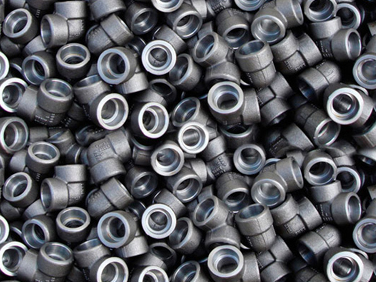
Washer is a mechanical component in industrial piping systems that is typically placed between a bolt or nut and the surface of a flange or equipment. The main function of the washer is to evenly distribute the clamping force applied by the bolt and nut, preventing stress concentration at the connection point.
Unlike gaskets, which are responsible for sealing fluids, washers do not provide sealing and are used as a mechanical element to enhance connection stability. This separation of roles is critical in the proper design of flange connections in oil, gas, and petrochemical lines.
In industrial systems, using the correct washer can prevent loosening of connections, flange surface deformation, or damage to bolts and nuts. Therefore, washers are considered an integral part of flange connection assemblies.
Applications of Washers in Oil, Gas, and Petrochemical Lines
Washers are used in industrial projects and piping lines in various situations, including:
- Flange connections in oil and gas transmission lines
- Installation of industrial valves and equipment
- Structural and piping equipment connections
- EPC projects with high safety requirements
- Applications where even distribution of clamping force is critical
Types of Industrial Washers
Washers used in oil, gas, and petrochemical industries are produced in various types depending on the connection and operating conditions:
- Flat washer: The most common type for uniform force distribution
- Spring washer: Prevents loosening of connections under vibration
- Steel washer: Suitable for high mechanical pressures
- Alloy washer: Suitable for special conditions and high temperatures
Technical Specifications and Selection Requirements
Washers supplied by Petro Tejarat Sahel Kish are selected based on the technical specifications of the connection and operational conditions. Factors such as bolt diameter, clamping force, vibration conditions, ambient temperature, and material type all play a role in selecting the appropriate washer.
Incorrect washer selection can lead to stress concentration, bolt and nut loosening, or reduced service life of the connection. Therefore, technical evaluation before selecting a washer is essential in industrial projects.
Advantages of Using Standard Industrial Washers
- Even distribution of bolt and nut clamping force
- Prevents damage to flange surfaces and equipment
- Enhances connection stability and safety
- Reduces the likelihood of connection loosening
- Increases the service life of bolts, nuts, and flanges
Project-Oriented Supply of Washers by Petro Tejarat Sahel Kish
The approach of Petro Tejarat Sahel Kish in supplying industrial washers is based on careful evaluation of project requirements and connection specifications. Selection of washer type, material, and dimensions is performed to maximize safety and durability of connections.
This project-oriented approach helps contractors and EPC executors select the appropriate washer as part of a standard, reliable connection.